 Living room TV
The 30-second spot.
It plays during their favorite streaming show, on the biggest screen in the house, with no skip button.

Your TV commercial, playing only inside the homes and businesses you choose. Then on their laptops, tablets and phones. Then waiting at the top of Google when they search your name.
Starts with a real addressNot a guess modeled from someone's browsing.
No cookies requiredIt works on the household connection, not browser cookies.
Wired into Google AdsThe TV ad creates the demand. Your search ads catch it.
Cable reaches fewer homes every year, and broad digital ads spend your budget on people who will never buy. Your best prospects are a specific list of homes and companies. You should be able to reach exactly them.
A first: in the 2026 upfronts, advertisers committed more to streaming TV than to primetime traditional TV.eMarketer
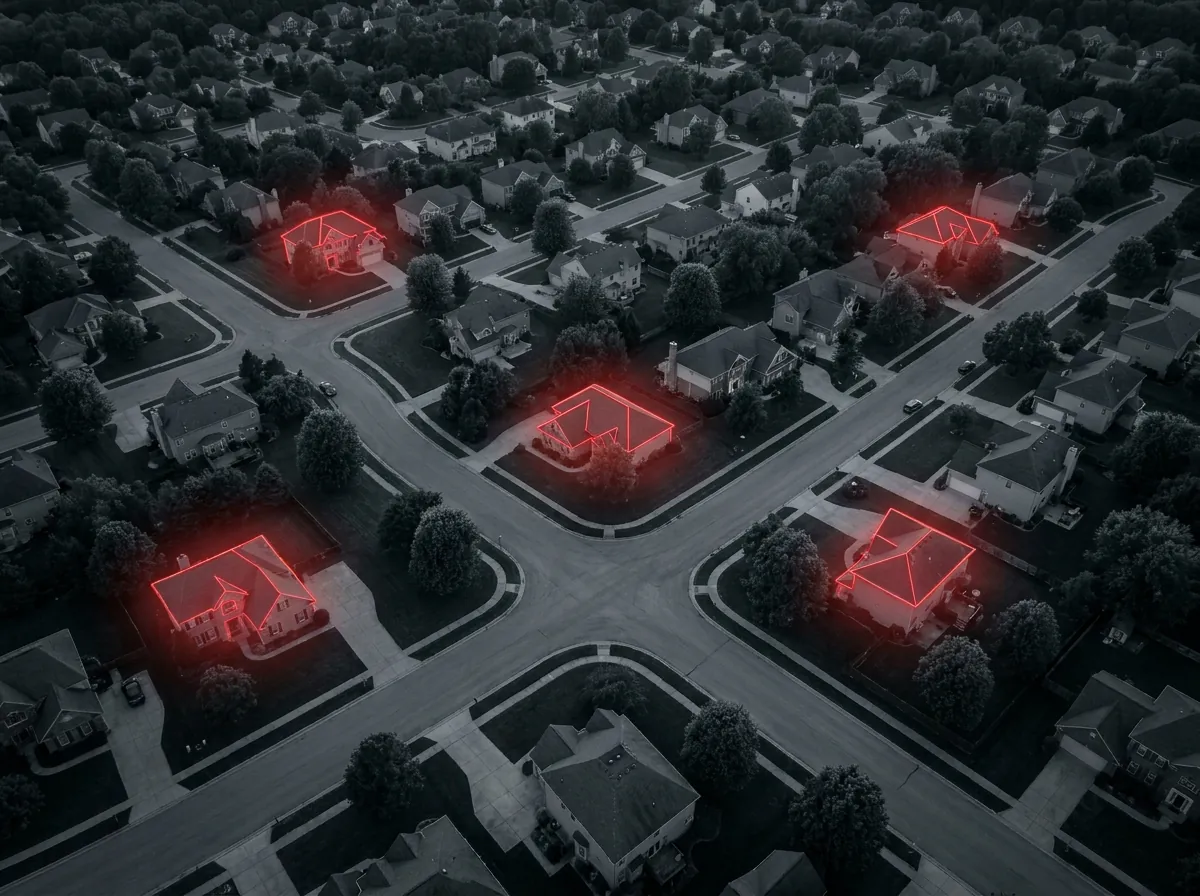
It works like direct mail, except the mailbox is every screen on the Wi-Fi: the smart TV, the laptops, the tablets and the phones.
Your customers or CRM, a list of target accounts, or the homes and businesses that fit your buyer: homeowners in chosen ZIP codes, companies by industry and size.
Every home and office router has an IP address, and data partners link mailing addresses to the connections that serve them. Some won't match (new construction, shared networks), so your matched audience is always a little smaller than your list. We tell you the number before launch.
When an ad slot opens on a device behind one of those connections, the platform recognizes it and bids. Your spot plays on their smart TV, then follows on their laptop, tablet and phone, across thousands of apps and websites.
TV isn't just for national budgets anymore. Cable made you buy a whole channel in a whole market. Connected TV is bought one impression at a time, so a regional brand can run real TV to just its target households.
| Compared on | The usual way | IP targeting & CTV |
|---|---|---|
| Who sees it | Everyone in the market, buyer or not | Only the homes and businesses on your list |
| Starts from | A ratings estimate, or a guess modeled from browsing | A real household or business address |
| Cookies | Third-party cookies, increasingly blocked | None required |
| Who it reaches | One person on one device | The whole household or buying team, on every screen |
| Waste | Budget spent on people who will never buy | Impressions go only to the addresses on your list |
| Attention | Skipped, scrolled past, channel-surfed | The biggest screen in the room, usually unskippable, with completion rates above 90% |
| Proof | Ratings estimates and clicks | Site visits, brand searches and sales, matched by address |
| Cord-cutters | Invisible to cable buys | Reachable wherever they stream |
Completion rate: industry benchmarks for connected TV put it above 90%, far higher than mobile or desktop video.
IP targeting decides who sees the ad. Connected TV is the most powerful place to show it. Together they follow one household from the couch to the search bar.
Living room TVIt plays during their favorite streaming show, on the biggest screen in the house, with no skip button.
 Kitchen tablet
Pre-roll before a video on the tablet. Same home, same Wi-Fi, same message, shorter.
 Home laptop
A display banner on a news site, on the laptop connected to the same network.
 Phone
Someone in the home searches your brand name. Your Google Ads brand search ad is already waiting at the top.
Their website visit and purchase are matched back to the campaign by address. TV finally gets the credit it earned.
We don't just put you on TV. We put you on TV in the right homes, then make sure you win the search that follows.
Most IP targeting vendors sell impressions and stop there. We run your IP targeting and your Google Ads as one program, so every channel makes the others smarter. The TV ad creates the demand. Google Ads captures it.
CRM accounts, target businesses, homeowner profiles and modeled lookalike audiences.
The lists are matched to households and businesses, plus venue and event retargeting.
CTV, pre-roll and display tell one story on every screen at the address.
Exposed homes and businesses look you up, and branded searches climb.
Brand search, non-brand search and Performance Max are ready to catch that intent.
Customer Match and audience signals in Performance Max and Search tell Google's bidding who matters, so your search budget concentrates on the people TV already warmed up.
Our Google Ads managementMatchback reporting shows which targeted homes and businesses converted, and those insights sharpen the next list. The loop gets smarter every month.
Every tactic can run alone, but they hit hardest layered together. Tap the ones you're curious about to build your mix, and we'll shape your estimate around it.
If you can describe your buyer by where they live or work, we can reach them. Selling to both? Each audience gets its own list, its own creative and its own goal, inside one plan.

Reach the households that fit your buyer, on every screen in the house.
Reach the people inside the companies on your list, at the office and at home.
Homeowners who fit the buyer profile, plus people seen at home shows and design showrooms.
Warehouses, CRM accounts and logistics trade show attendees.
Your audience is a known list of addresses, so results are read address by address, not guessed from clicks. Success shows up in site visits, branded search and matchback, not click-through rate.
How much of your list the campaign can actually reach.
How many targeted addresses saw the ads, and how often.
Whether people watched the whole spot.
Visits from targeted addresses after seeing an ad, including from TV, which has no click.
Growth in branded searches in Google Ads during the campaign.
Targeted customers or accounts that bought, booked or became leads.
Example dashboard for illustration only. Your numbers depend on your list, budget, creative and market. We report monthly, in plain language.
Being straight about how this works builds more trust than overselling it. Here's what to know before you spend a dollar.
IP targeting reaches a home or business internet connection, not a named person. No names or personal details are shown to ad buyers or attached to the ads.
Some state privacy laws, including California's and Virginia's, treat IP addresses as personal information. We work only with platforms that honor opt-outs and comply with current state laws.
Customer lists are handled under a data agreement, hashed or processed securely, and never resold.
No TV commercial yet? We produce CTV-ready 30 and 15-second spots, or adapt video you already have. See our creative work.
Goals, buyers, geography and budget, plus what success looks like for you: leads, sales, store visits or brand search.
We assemble and clean the lists: your CRM, target accounts, homeowner or business profiles, venues and competitor locations, plus AI-assisted audience modeling.
We produce or adapt 30 and 15-second spots for CTV, cut-downs for pre-roll and matching display, with separate creative for each audience.
Campaigns go live across CTV, online video and display, with tracking connected to your website and Google Ads.
The same audiences feed Customer Match and Performance Max, so search catches the demand TV creates.
We adjust lists, frequency, creative rotation and budget by audience, based on what's working.
Monthly reporting on reach, completion, site visits, brand search lift and matchback conversions, in plain language.
IP targeting is digital advertising that shows ads on the devices connected to specific home or business internet connections, chosen from a list of physical addresses. It works like direct mail, except the mailbox is every screen on that Wi-Fi: the smart TV, laptops, tablets and phones.
Connected TV (CTV) advertising places commercials in streaming content on internet-connected TVs, such as smart TVs, Roku, Fire TV, Apple TV, game consoles and streaming apps. The ads look like TV commercials but are bought digitally, so they can be aimed at specific households and measured like online ads.
CTV is streaming watched on a television screen. OTT (over the top) covers streaming content on any device, including phones and computers. CTV is the part of OTT that plays on the TV.
No. IP targeting reaches specific addresses from a list. Geofencing captures devices seen inside a drawn boundary, such as a trade show or a store, and can then retarget those devices at home.
No. It relies on the IP address of a home or business internet connection, not third-party browser cookies, which are increasingly blocked or limited.
Yes, when it runs on compliant platforms. Ads reach a household or business connection, not a named individual, and reputable platforms honor opt-outs and state privacy laws. Some states, including California and Virginia, treat IP addresses as personal information, so we work only with platforms that comply.
Yes. Customer and CRM lists are one of the most effective starting points. We handle them under a data agreement, hashed or processed securely, and never resell them.
Yes. B2B IP targeting reaches the networks at target company locations, which makes it a practical account-based marketing tool. Small B2B lists pair well with trade show and event retargeting.
Through site visits from exposed households, growth in branded search, and matchback reporting that ties targeted addresses to later conversions. CTV is a view-through channel, so success shows up there, not in click-through rate.
It varies with list quality and type. Residential lists usually match better than business lists, and clean, current lists match best. We give you a match estimate before launch.
We recommend at least three months, so your audience sees enough repetition and results have time to show.
It helps, but it isn't required. We can produce CTV-ready 30 and 15-second spots or adapt video you already have.
Send us your list type and market. We'll come back with how many of those homes or businesses we can match, before you spend a dollar on media.
Tell us the basics. We'll follow up to talk through your list.
No list upload needed yet. If you go ahead, your list is handled under a data agreement.